
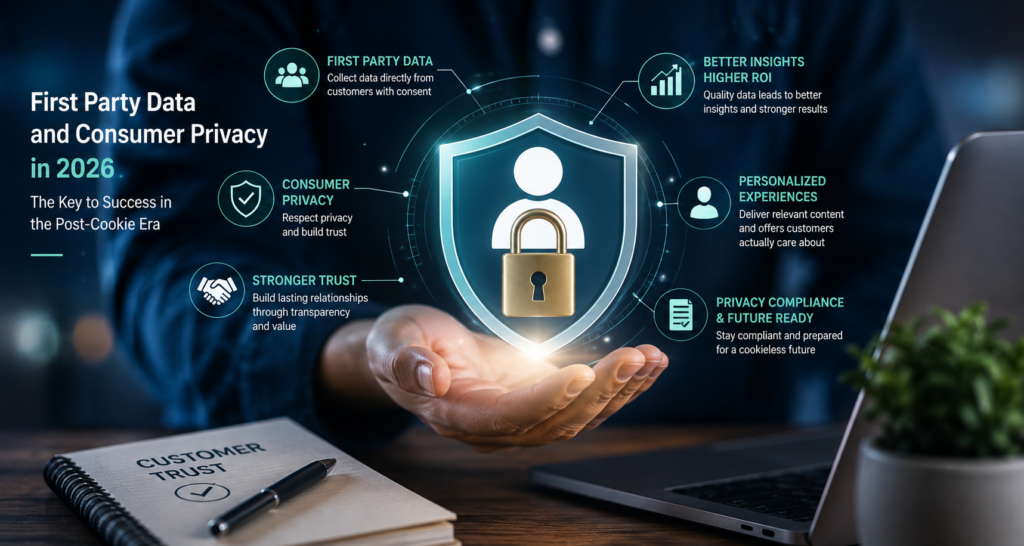
Digital marketing in 2026 has hit its watershed moment. There’s simply no longer a practical way to target consumers through rented marketing data because of the stringent privacy laws across the world and the disappearance of third-party cookies.
First Party Data—data that you collect from your audience directly and freely—is the ultimate competitive edge in the current privacy-focused landscape. This is how your business will evolve.
First Party Data: What is it?
First party data is information which is collected directly by your business from its customers through its own means, such as websites, email subscriptions, purchase histories, customer feedback and CRM systems. First party data is precise, extremely relevant, privacy compliant, and completely under your control, unlike third party data which is bought from an external source.
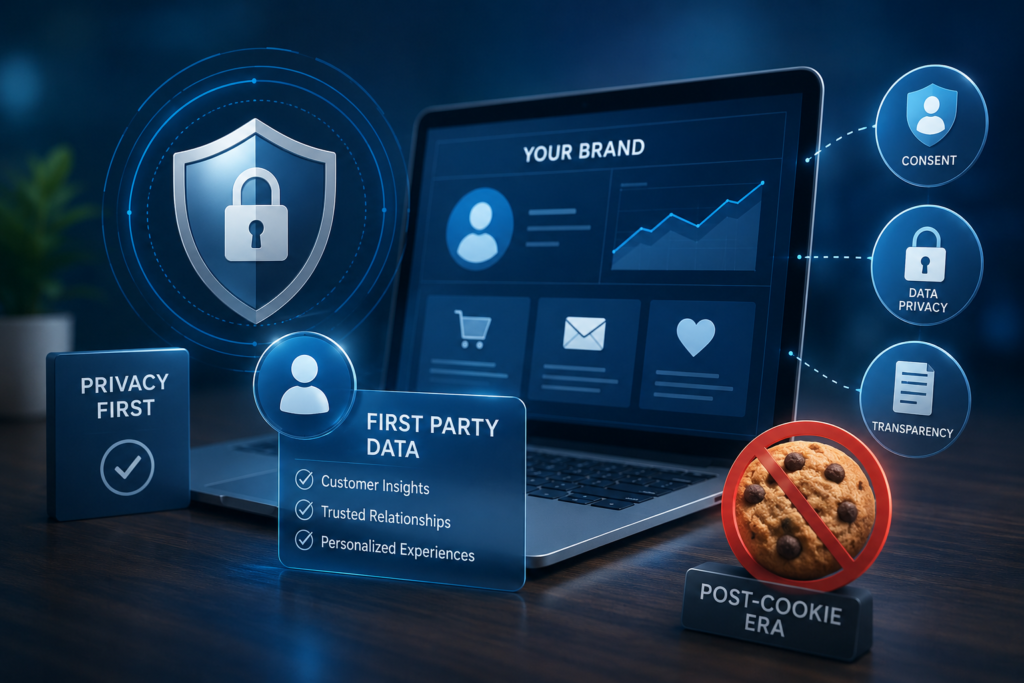
Why Privacy & First-Party Data Matter Most in 2026
1.Failure of Third Party Oversight
Limited by web browsers, ad blocking software, and strict data privacy rules, traditional retargeting ads can be more expensive and inefficient. Direct relationships with consumers are critical for brands.
2.Client Loyalty and Trust Improved
Data privacy is an important issue for the contemporary customer. When companies respect privacy boundaries and are transparent in their data usage, there will be huge levels of customer trust and brand loyalty.
3.Highly Tailored Advertising Experiences
With first-hand data, it is possible to create personal offers, loyalty programs, and emails based on what customers do instead of making assumptions about their behaviour.
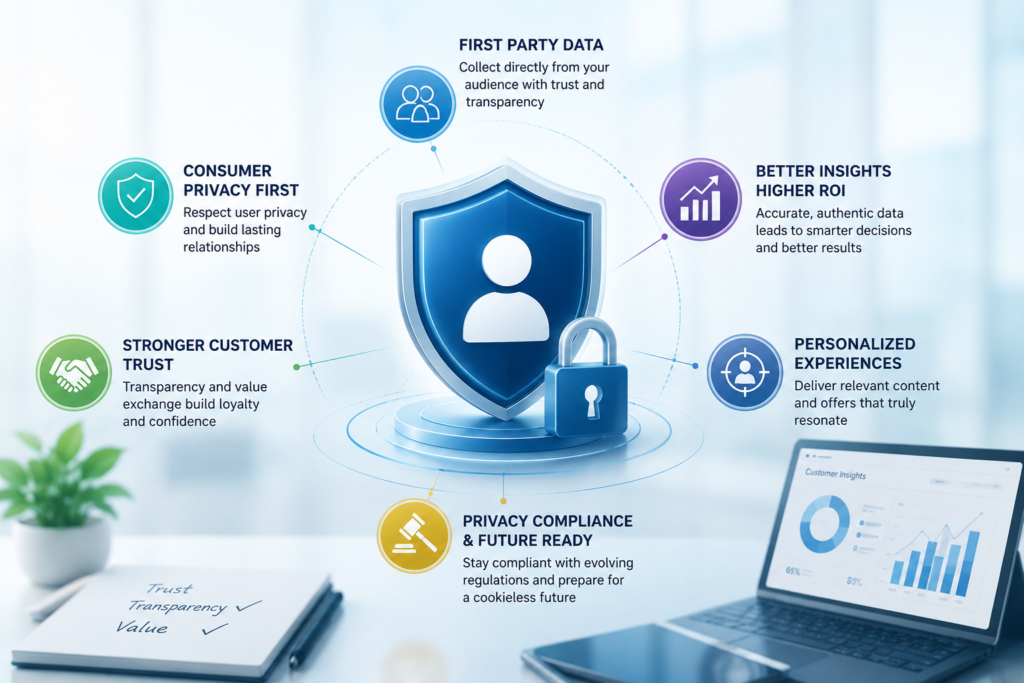
Four Ways to Collect and Utilize First-Party Data
1.Offer Value In Exchange For Their Information: Give them some sort of value like giving away guides, special discounts, VIP privileges, or even a test.
2.Use e-mail marketing and WhatsApp: Establish direct avenues of contact with your subscribers where you can communicate directly and control the list yourself.
3.Implement CRM Systems: Identify customer touchpoints, purchasing behaviour, and customer support interactions through efficient use of customer data via advanced CRM systems.
4.Keep Transparency in Privacy Policies: For cultivating long-term trust among the customers, provide transparency in the manner of handling customer data and consent options.